
EcoPro Range.
Tested. Proven. Published.
Independently tested against 100+ contaminants by four accredited laboratories. These are the results — every number, every lab, nothing hidden.
The invisible contamination in every glass.
Microplastics have been found in 94% of Australian tap water samples. They're endocrine disruptors linked to inflammation, hormone interference, and cellular damage. You can't see them. You can't taste them. But they're there — unless you filter them out.
Microplastics removed
Tested with 100 particles per litre (each >2 μm). After filtration: ≤1 particle per litre. The carbon block in Stage 2 physically blocks microplastics from passing through.
Particles down to 2 microns filtered out. Tested by SimpleLab.
Size comparison — what gets filtered
EcoPro carbon block filters down to 1–2 μm
Microplastics are physically too large to pass through. They're blocked, not chemically treated.
Why microplastics matter
Every time you drink unfiltered tap water, you're consuming microscopic plastic fragments from packaging, clothing, and industrial waste. These particles are too small to see but large enough to cause harm — they accumulate in your organs and bloodstream over time.
A 2024 study found microplastics in every human blood sample tested. They've been linked to inflammation, oxidative stress, and endocrine disruption. For children, the exposure risk is even higher relative to body weight.
Particles per litre
Found in treated municipal water across Australia
Worse in bottles
Bottled water contains up to 10× more microplastics
After EcoPro
Physical filtration blocks particles >2 μm
The reason your water smells like a pool.
Chlorine keeps water safe in the pipes. But by the time it reaches your tap, its job is done — and what's left behind is the taste, the smell, and the byproducts you don't want in your glass, your kettle, or your coffee.
Chlorine removed
Tested per NSF/ANSI Standard 42 with influent concentration of 2.0 mg/L. The activated carbon block in Stage 3 is specifically designed to adsorb chlorine — it's what carbon does best.
Tested to NSF/ANSI 42. Eliminates taste and odour at the source.
What we tested — and removed
Free Chlorine
The main disinfectant in Australian tap water
Chloramine
Secondary disinfectant, harder to remove
Trihalomethanes (THMs)
Byproduct of chlorine reacting with organic matter
Haloacetic Acids (HAAs)
Chlorination byproducts linked to cancer risk
What you'll notice
Swimming pool smell — gone
No more chlorine odour when you fill a glass or boil the kettle
Chemical aftertaste — gone
Water tastes clean and neutral, the way it should
Better coffee, better tea
Chlorine-free water lets the real flavour come through
Chlorine is safe. But it shouldn't be in your glass.
Australian water utilities add chlorine to kill bacteria during distribution. It's effective and necessary — but once water reaches your home, the chlorine has done its job. What remains is a chemical that affects taste, irritates skin, and reacts with organic compounds to create potentially harmful byproducts.
Trihalomethanes (THMs) form when chlorine reacts with natural organic matter. Long-term exposure has been linked to bladder cancer and reproductive issues. The EcoPro removes >99.5% of chloroform and 95% of total THMs.
The difference is immediate. You'll notice it the first time you pour a glass — no chlorine taste, no swimming pool smell.
Pool chlorine
Typical swimming pool concentration
Your tap water
mg/L chlorine in Australian taps
THMs removed
Chlorination byproducts eliminated
After EcoPro
mg/L — virtually undetectable
93% PFAS removal. From a tap filter.
Most carbon filters can't meaningfully reduce PFAS. The EcoPro's 5-stage activated carbon block was independently tested against five common PFAS compounds spiked well above regulatory limits — and removed 93% of total PFAS.
Total PFAS removed
Total PFAS concentration reduced from 3,280 ng/L to 230 ng/L (sum of 20 PFAS). Tested by Laboratorio Echevarne, an accredited European laboratory. For a carbon-based tap filter, this is an exceptional result.
Includes PFOA, PFOS, and 18 other forever chemicals. Tested by Echevarne.
Why PFAS are called "forever chemicals"
PFAS (per- and polyfluoroalkyl substances) are synthetic chemicals used in non-stick coatings, food packaging, firefighting foams, and waterproofing. They're called "forever chemicals" because they don't break down in the environment or in your body.
They've been found in tap water, rainwater, and blood samples worldwide. Long-term exposure has been linked to cancer, thyroid disease, immune suppression, and reproductive issues. There is no safe level of accumulation — the goal is to minimise exposure as much as possible.
Most standard carbon filters remove little to no PFAS. The EcoPro's dense activated carbon block achieves 93% removal — exceptional for a gravity-fed tap filter. For near-total PFAS elimination, reverse osmosis is required.
5 PFAS compounds tested
PFOS
Spiked at 100 ng/L
PFOA
Spiked at 500 ng/L
PFHxS
Spiked at 1,000 ng/L
PFBS
Spiked at 2,000 ng/L
PFHxA
Spiked at 2,000 ng/L
Important context on this test
This test used a heavily spiked sample — PFAS concentrations were deliberately set 10–30× higher than levels typically found in Australian tap water.
This is standard stress-testing practice. At real-world Australian tap water levels (typically 5–50 ng/L), 93% removal brings you well below all regulatory limits.
Partial fluoride removal — honest results.
Most filters claim they remove fluoride — but most can't. Standard carbon filters remove virtually 0%. The EcoPro achieves a genuine 70% reduction, independently verified. For near-total removal, reverse osmosis is the only proven method.
Fluoride reduced
Influent: 1.5 mg/L → Effluent: 0.15–0.45 mg/L. Significant reduction for a carbon-based filter. Tested by Austrian Water Institute and SimpleLab.
Most carbon filters can't touch fluoride. The EcoPro achieves 70% reduction.
Why fluoride is different — it's a physics problem, not a micron problem
Most contaminants are particles — they're physically bigger than the pores in the filter, so they get trapped. Fluoride doesn't work like that. It's a dissolved ion — a single fluorine atom carrying a negative charge, dissolved at the molecular level. It's smaller than a water molecule's hydrogen bonds and passes straight through mechanical filtration.
That's why standard carbon filters remove 0% of fluoride. It's not a question of pore size — it's chemistry. The EcoPro's dense activated carbon block achieves 70% reduction through adsorption and ion exchange, where fluoride ions are attracted to and held by the carbon surface. That's exceptional for any carbon-based system.
For near-total removal, you need reverse osmosis — a membrane so fine it strips almost everything from water at the molecular level, including fluoride ions.
What actually removes fluoride
Tappwater EcoPro
5-stage activated carbon block
Tappwater RO Countertop
Reverse osmosis membrane (0.0001 μm)
Jug / pitcher filters
Standard carbon cartridge
Boiling water
Kettle / stovetop
Our honest take on fluoride
If you're concerned about fluoride in your drinking water, the EcoPro gives you a meaningful 70% reduction — far better than any standard carbon filter on the market, which typically remove 0%.
However, if complete fluoride removal is your primary concern, reverse osmosis is the gold standard. Our RO Countertop removes >99% of fluoride, reducing it to below detectable limits.
We believe you deserve real data, not inflated marketing claims. That's why we publish both numbers side by side.
Need near-total fluoride removal? Our Tappwater Countertop Reverse Osmosis Filter is the answer — with over 99% fluoride reduction, no plumber required.
Up to 80% less limescale.
The EcoPro prevents limescale formation without removing healthy minerals. Tested in-house with very hard water (324 mg CaCO₃/L), May–June 2023.
Limescale reduction
Prevents scale buildup on kettles, coffee machines, and taps — while keeping calcium and magnesium in your water. Reduction gradually decreases over filter life.
Prevents buildup on kettles and taps — while keeping healthy minerals.
Reduction over filter life
How it works — without removing minerals
The EcoPro doesn't remove calcium and magnesium — those are healthy minerals you want. Instead, it prevents them from forming hard limescale deposits on your kettle, coffee machine, and taps.
The ion exchange resin in Stage 4 modifies the mineral structure so scale can't crystallise. Tested with very hard water (324 mg CaCO₃/L).
For the first 800 litres (~3 months), limescale is reduced by over 80%. After that, it gradually decreases — another reason to replace your filter quarterly.
If you're in a hard water area — most of Sydney, Melbourne, and Adelaide qualify — you'll notice cleaner kettles in days.
Every contaminant. Every number.
Data from independent testing by SimpleLab, Laboratorio Echevarne, Austrian Water Institute, and Equinox Labs. NSF/ANSI 42 & 53 standard protocols.
| Contaminant | Removal rate | Why it matters | Category |
|---|---|---|---|
| PFAS & Chemicals | |||
PFAS (Sum of 20) |
93% |
Forever chemicals — cancer, immune disruption, hormone interference | PFAS |
Chlorine |
98% |
Taste, odour, skin and gut irritation | Chemical |
Chloramine |
>97.5% |
Disinfectant byproduct, respiratory and skin irritation | Chemical |
Fluoride |
70% |
Controversial additive — partial removal via carbon | Chemical |
Chloroform (TTHM) |
>99.5% |
Disinfection byproduct, potential carcinogen | Chemical |
Total Trihalomethanes |
>95% |
Group of disinfection byproducts linked to cancer | Chemical |
Total Haloacetic Acids |
95% |
Byproducts of water chlorination | Chemical |
Benzene |
>99% |
Known carcinogen from industrial contamination | Chemical |
Cyanide |
95% |
Highly toxic chemical contaminant | Chemical |
Nitrites |
70% |
Dangerous for infants, linked to methemoglobinemia | Chemical |
Nitrates |
70% |
Agricultural runoff — especially harmful to infants | Chemical |
Turbidity |
>99% |
Cloudiness from sediment and particulate matter | Chemical |
Particulate Class II |
>99% |
Fine suspended particles in water | Chemical |
Microplastics |
>99% |
Endocrine disruptors found in all tap water | Chemical |
| Heavy Metals | |||
Lead (pH 6.5 & 8.5) |
>95% |
Neurotoxin — especially harmful to children | |
Mercury (pH 6.5 & 8.5) |
>99% |
Nervous system damage, developmental harm | |
Aluminium |
90% |
Linked to neurological concerns | |
Antimony |
90% |
Respiratory and cardiovascular effects | |
Barium |
90% |
Cardiovascular and kidney effects | |
Cadmium |
90% |
Kidney damage, bone demineralisation | |
Copper |
80% |
Gastrointestinal issues, liver damage at high levels | |
Iron |
80% |
Metallic taste, staining, GI issues | |
Nickel |
80% |
Allergic reactions, skin sensitisation | |
Selenium |
80% |
Hair loss, nail changes at high levels | |
Manganese |
80% |
Neurological effects at high exposure | |
Zinc |
80% |
Nausea, metallic taste | |
Arsenic |
50% |
Carcinogen found in groundwater | |
| Pesticides & Herbicides | |||
Alachlor |
>98% |
Herbicide linked to cancer risk | Pesticide |
Atrazine |
>97% |
Endocrine disruptor, common herbicide | Pesticide |
Chlordane |
>99% |
Banned organochlorine insecticide | Pesticide |
Lindane |
>99% |
Persistent organic pollutant, neurotoxin | Pesticide |
2,4-D |
98% |
Widely used herbicide, possible carcinogen | Pesticide |
Heptachlor |
95% |
Banned insecticide, liver damage risk | Pesticide |
Chlordecone |
95% |
Persistent organochlorine, carcinogenic | Pesticide |
| Chlorine Byproducts | |||
1,2 Dichloromethane |
95% |
Industrial solvent, potential carcinogen | Chemical |
Trichloroethylene |
95% |
Known carcinogen, industrial degreaser | Chemical |
Tetrachloroethylene |
95% |
Dry cleaning solvent, liver and kidney damage | Chemical |
| Pharmaceuticals* | |||
Atenolol |
>95% |
Beta-blocker medication | Chemical |
Carbamazepine |
>95% |
Anti-seizure medication found in water supply | Chemical |
Estrone |
>95% |
Estrogen hormone, endocrine disruptor | Chemical |
Meprobamat |
>95% |
Anti-anxiety medication | Chemical |
Trimethoprim |
>95% |
Antibiotic commonly found in waterways | Chemical |
| Bacteria & Pathogens | |||
Microbial Cysts |
95% |
Giardia, Cryptosporidium — chlorine-resistant parasites | Biological |
Clostridium |
90–95% |
Causes food poisoning and gas gangrene | Biological |
E. coli |
80–90% |
Causes severe gastrointestinal illness | Biological |
Enterococcus |
50–90% |
Antibiotic-resistant pathogen indicator | Biological |
Four independent labs
Testing by SimpleLab, Laboratorio Echevarne, Austrian Water Institute, and Equinox Labs. Multiple labs, consistent results.
TAP Score: 98 (Excellent)
SimpleLab rates filtered water on a 0–100 scale based on federal and state guidelines plus academic research. TAPP filters scored 98 out of 100 — rated Excellent.
Transparent results
We publish our full lab reports. Download them, read them, share them. If other brands won't publish theirs — ask them why.
5 stages of filtration. 6 with the SMR.
Every EcoPro filter uses the same 5-stage filtration core. The EcoPro SMR adds a 6th stage — Swedish Mineral Rock™ — for enhanced mineralisation. Together, they remove or reduce 100+ substances from your tap water — no electricity, no wastewater, no plumber required.
Polypropylene Mesh
Captures larger particles and some microorganisms. Pre-filtration that protects the carbon block and extends filter life.
Carbon Block — Mechanical Filtration
Removes all particles larger than 1–2 microns, including microplastics, rust, and bacteria. A physical barrier that nothing big gets through.
Activated Carbon — Chemical Adsorption
Adsorbs nano-contaminants such as chlorine, pesticides, herbicides, PFAS, and pharmaceuticals. This is what makes the water taste clean.
Limescale Inhibition (Polyphosphates)
Prevents limescale from building up and adhering to surfaces. Keeps your kettle and coffee machine scale-free without removing healthy minerals.
Metallic Mesh
Acts as a final barrier, capturing any remaining particles after filtration. A last line of defence before the water reaches you.
Swedish Mineral Rock™
Adds essential minerals like calcium, magnesium, and potassium back to your water — supporting hydration and health. Clean water that actually tastes the way great water should.
EcoPro SMR onlyBuilt to standard. Independently certified.
Beyond lab testing, every EcoPro filter meets international safety, material, and environmental standards.
Food Grade (FDA/EU)
Safe for contact with drinking water per EU Reg. 1935/2004
CE Marked
Meets EU health and safety requirements
BPA Free
Verified to contain zero BPA
REACH Compliant
No chemicals on the SVHC restricted list
RoHS2 Compliant
No prohibited hazardous substances
EN 1208:2005
European standard for water treatment chemicals
Lead Free & Cruelty Free
Zero lead content, no animal testing
Solar Impulse Certified
Verified CO₂ reduction claims
What "tested" actually means.
Most water filter brands claim their products are tested. Here's what that typically looks like — versus what we actually do.
| Tappwater | Most brands | |
|---|---|---|
| Independent lab testingThird-party verification, not self-tested | ✓ | ✗ |
| Lab reports publishedFull reports available for download | ✓ | ✗ |
| 100+ contaminants testedAcross NSF/ANSI Standard 42 & 53 | ✓ | ~ |
| Specific removal rates publishedExact percentages, not vague claims | ✓ | ✗ |
| PFAS independently tested5 compounds spiked above regulatory limits | ✓ | ✗ |
| Microplastics testedParticles down to 2 μm verified | ✓ | ✗ |
| Honest about limitationsWe publish the 70% fluoride alongside the 98% chlorine | ✓ | ✗ |
| Tested with real tap waterNot lab-pure water that inflates results | ✓ | ~ |
Choose your filter.
From tap-mounted to countertop reverse osmosis — every Tappwater filter is independently lab tested. Pick the format that fits your kitchen.
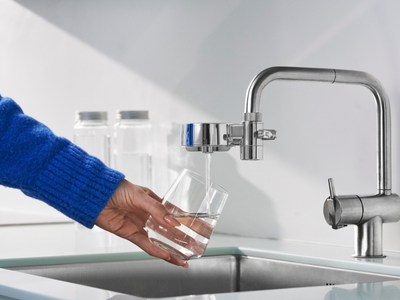
Same 5-stage filtration in a smaller body. Fits virtually any tap with included adaptors. The one most Australians choose.
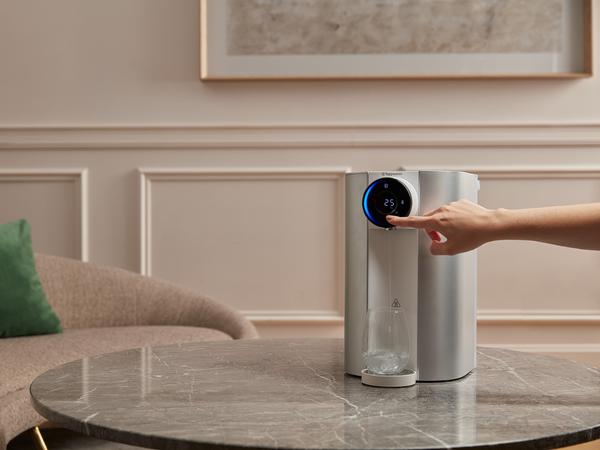
No plumber, no installation. RO purification with 6 temp presets up to 95ºC. Replaces your filter and your kettle.